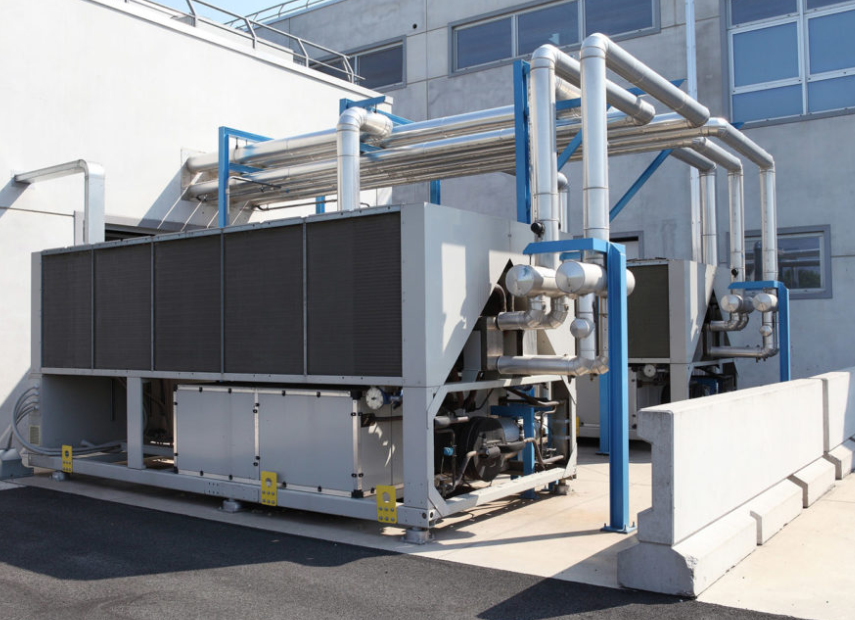
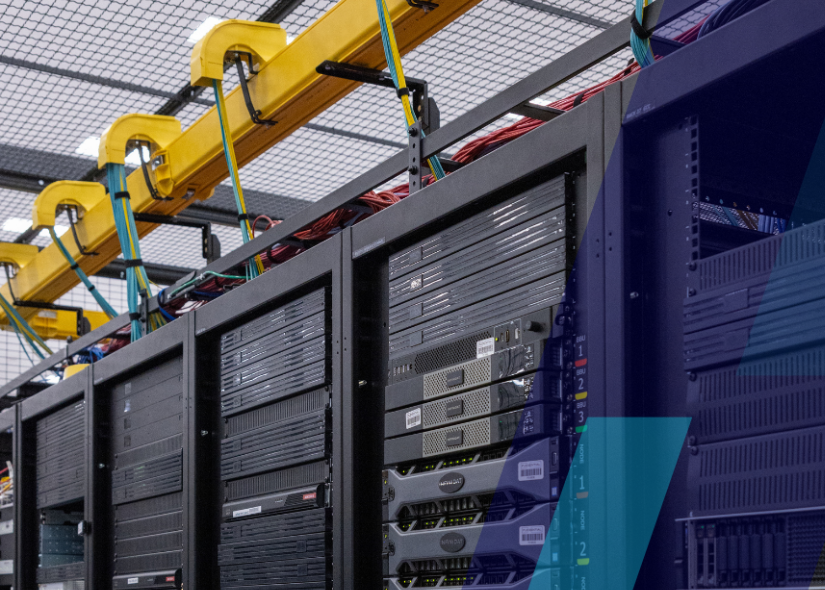
Every time a user prompts an LLM, trains a computer‑vision model, or runs a weather simulation, an invisible “heat” builds—not in the room where they sit, but inside the data centers that power AI. Thousands of silicon dies are churning at full throttle, and the more capable they become, the more they strain the very electrical and thermal systems that sustain them.
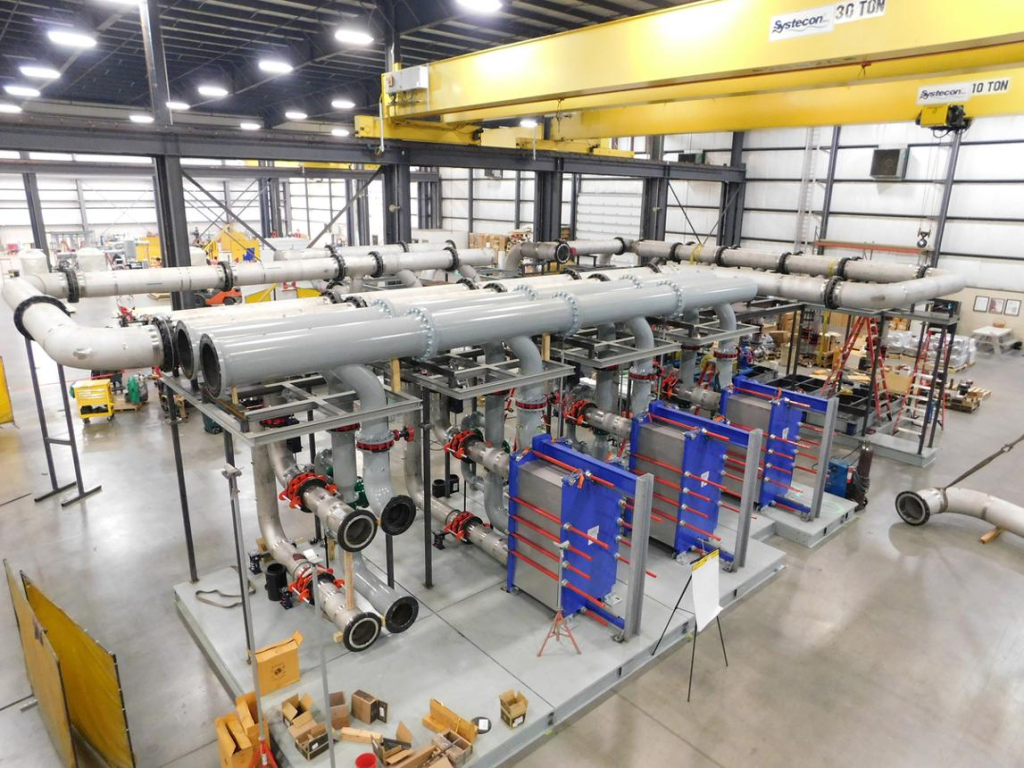
This tension is forcing a fundamental restructuring of data center architecture. Compute, electricity, and cooling are no longer loosely coupled utilities; they are becoming deeply interwoven. The new logic—what we call “power‑compute synergy” and “power‑cooling synergy”—is redefining the competitive ceiling of AI infrastructure in North America.
The Structural Shift: From Legacy Data Centers to AI Factories
By 2026, global data center spending is projected to reach $650 billion USD, up 31.7% year‑over‑year, according to Gartner. Driven by AI, server power consumption is expected to double within four years. The IEA estimates that by end‑2026, worldwide data center electricity demand will hit 1,050 TWh—roughly equivalent to Germany’s total national consumption.
These numbers point to a clear conclusion: the compute surge is not merely increasing electricity bills; it is triggering a structural transformation from traditional enterprise data centers to AI‑optimized data centers (AIDCs). As industry experts note, this shift encompasses three paradigm changes:
- Technology – Skyrocketing server power densities rewrite power distribution and cooling architectures.
- Construction – The demand for rapid, standardized deployment is reshaping delivery and operations models.
- Business – Customer procurement is moving from discrete components to integrated, turnkey solutions.
Change #1: The Density Revolution – Power Curves Go Vertical
AI chips are driving a density revolution at an unprecedented pace. NVIDIA’s Blackwell‑architecture GPU, for example, consumes four times the power of its predecessors, pushing a fully populated B200 server rack to 120 kW. And NVIDIA’s own roadmap shows the Rubin Ultra platform (expected in late 2027) targeting an astonishing 600 kW per rack.
This trajectory is not limited to GPUs—custom ASICs from cloud providers are following the same high‑density path. Industry data from leading power and cooling vendors shows that from Blackwell (~150 kW) to future Vera Rubin (250–360 kW), rack densities are climbing far faster than air cooling can handle. The practical air‑cooling limit settles at roughly 50–70 kW per rack; beyond that, liquid cooling becomes mandatory.
For North American operators, this is not a gradual curve—it is a cliff. Any new AI cluster designed for high‑performance training or inference must assume densities that were unthinkable just three years ago. That means every subsystem—from busbars to chillers—must be re‑engineered.
Change #2: Power Architecture – The Arrival of High‑Voltage DC
The sheer appetite of AI chips is turning data centers into “power black holes.” Traditional 48V AC distribution—with its long chains of transformation and rectification—suffers from high losses and complex cabling. As rack densities soar, the industry is accelerating toward high‑voltage DC (HVDC) architectures.
The benefits are tangible: fewer copper conductors inside racks, simplified UPS integration, and the ability to move power supplies out of the server chassis, freeing valuable space for compute. While legacy 400V AC systems are reaching their efficiency limits, 800V DC is emerging as the future standard. The Open Compute Project (OCP) has already proposed 400V DC distribution, and pioneering vendors are working on 800V DC prototypes with live‑swap capabilities—borrowing from AC UPS “hot‑swap” reliability.
For U.S. and Canadian facilities, this voltage upgrade is not just an engineering choice; it is a capacity enabler. Without HVDC, the copper mass and cooling requirements for 100kW+ racks become physically unmanageable. Early adopters are already piloting 800V DC in greenfield AIDC projects, and we expect broad commercial rollout by 2028.
Change #3: Construction Logic – From Product Silos to System Integration
Legacy general‑purpose data centers typically took 18–24 months to design, build, and commission. In the AI era, that timeline is shrinking to 6–12 months—with some projects in Southeast Asia and the Middle East compressing to as little as 3 months. North American hyperscalers are under similar pressure, especially as they compete for time‑to‑market advantage.
This urgency forces a shift from component‑centric procurement to system‑level integration. Customers no longer buy separate UPS units, chillers, or racks; they buy complete, validated assemblies that arrive ready to plug in. The future AIDC will be built like LEGO—standardized modules that can be scaled elastically, reducing initial capital exposure while allowing rapid expansion as AI workloads grow.
For North American providers, this modular approach also mitigates labor shortages and site‑specific construction risks, which have become acute in key regions (e.g., Northern Virginia, Silicon Valley, and major Canadian hubs).
Power‑Cooling Synergy: The New Core Competency
If compute is the “brain” of the AIDC, then power is the vascular system and cooling is the respiratory system. Only when all three operate in lockstep can the facility reach its full potential.
Cooling Side: Liquid Cooling Moves from Optional to Mandatory
Air cooling physically maxes out at about 60–70 kW per rack—well below the 120 kW+ requirements of today’s AI servers. Liquid cooling, by contrast, offers far superior thermal transfer and is rapidly becoming a strategic necessity. TrendForce projects that by 2026, 40% of AI data centers will adopt liquid cooling, and at the chip level, that penetration will reach 47%. NVIDIA’s own Vera Rubin architecture explicitly mandates liquid cooling for all its SKUs.
However, not every facility can flip to full immersion overnight. Retrofits, cost constraints, and reliability concerns mean that a hybrid air‑liquid architecture will dominate for the next several years. This “wind‑liquid compatible” approach—analogous to today’s hybrid electric vehicles—allows operators to apply liquid only where it is most needed (direct‑to‑chip) while retaining air cooling for lower‑density components. Leading vendors are already offering flexible solutions that support rack‑level, row‑level, and room‑level liquid deployment, balancing reliability and economics.
Power Side: The Load Rollercoaster and the Reliability Imperative
Training large multimodal models or running inference for multi‑agent AI systems creates extreme load swings—from idle to full power in milliseconds. These “rollercoaster” profiles can cause voltage sags inside the data center and harmonic disturbances on the external grid. Moreover, Gartner predicts that by 2027, inference workloads will surpass training as the primary power consumer in AIDCs. Inference serves billions of end‑users, and any power glitch directly impacts user experience and revenue.
Consequently, North American operators are demanding higher availability and resilience from their power chains. Redundant distributed architectures (e.g., 4N/3N configurations) are becoming standard, and advanced power control systems with real‑time monitoring and predictive maintenance are essential. The next frontier includes 800V DC with live‑swap capabilities, allowing maintenance without downtime—a critical feature for 24/7 AI services.
Full‑Stack Capability: The New Competitive Battleground
Today’s AIDC is not a collection of best‑of‑breed components; it is an integrated “AI factory” where every subsystem must be co‑optimized. This reality elevates full‑stack capability—the ability to cover the entire chain from grid to chip, and across the entire lifecycle from strategy to decommissioning.
For North American decision‑makers, partnering with a vendor that offers:
- Power – end‑to‑end electrical protection from utility feed to server,
- Cooling – seamless air‑liquid hybrid thermal management,
- Software – AI‑driven workload scheduling and energy optimization,
- Services – consulting, deployment, and on‑site operational support,
- Integration – modular, prefabricated building blocks that speed time‑to‑market,
…is becoming the deciding factor between a project that ships on time and one that stalls.
Leading providers are already embedding their offerings in three stages:
- Strategy Readiness – Publishing industry white papers, co‑developing reference designs with chipmakers (e.g., NVIDIA), and advising on energy procurement to lower lifecycle costs.
- Solution Readiness – Delivering integrated power‑cooling‑software packages that are factory‑tested and site‑ready.
- Future Readiness – Ensuring modular scalability, compatibility with next‑gen voltages (800V DC), and waste‑heat recovery for district heating or greenhouse agriculture—an increasingly attractive value proposition in colder U.S. and Canadian climates.
A Note on Regional Nuance
While this global trend is uniform, the North American market exhibits its own characteristics:
- Higher average rack densities than many other regions, driven by hyperscale competition.
- Faster construction cycles—some U.S. projects now aim for sub‑12‑month delivery.
- Sharp focus on TCO, with energy costs and carbon pricing heavily influencing design choices.
At the same time, the U.S. and Canada must manage a dual legacy: vast installed bases of general‑purpose data centers that still host traditional cloud workloads alongside new AI clusters. Therefore, hybrid cooling and flexible power architectures that can coexist with older systems are particularly valuable here.
The Strategic Takeaway
We are witnessing the convergence of compute, electricity, and cooling into a single, inseparable system. The AIDCs of 2030 will be judged not by the peak FLOPS of their GPUs alone, but by how efficiently they convert every watt of grid power into useful AI output—and how reliably they shed the resulting heat.
For U.S. and Canadian enterprises, the path forward is clear:
- Adopt hybrid cooling now to bridge the transition, but plan for full liquid integration in new greenfield sites.
- Upgrade power distribution to HVDC (800V) to unlock future density and efficiency gains.
- Embrace modular, full‑stack delivery to compress construction timelines and reduce project risk.
- Partner with vendors that offer deep integration across the entire chain, not just isolated components.
The winners in the AI infrastructure race will be those who treat power and cooling not as overhead, but as strategic enablers—equal in importance to the silicon itself. In the new thermodynamics of AI, synergy is the only sustainable advantage.