As we move through 2026, the global surge in generative AI and large language models (LLMs) continues to push compute demand to unprecedented heights. This relentless growth has driven the thermal design power (TDP) of flagship CPUs and GPUs—such as NVIDIA’s post-Blackwell architectures, AMD’s Instinct MI400 series, and custom silicon from major cloud providers—well beyond the 1,000W mark, with some high-density clusters now exceeding even that per chip.
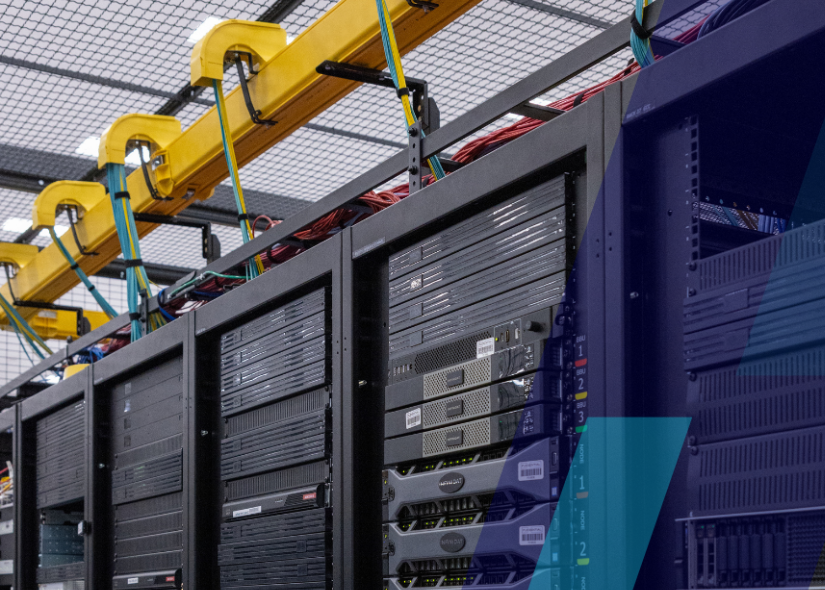
At the rack level, the arithmetic is stark: traditional air-cooled data centers are designed for 15–20kW per rack, with optimized setups struggling to reliably support more than 30kW. Yet today’s mainstream AI server racks routinely draw 60kW+, and ultra-dense deployments can reach 100–150kW. Air cooling has hit a hard wall—not just in thermal capacity, but in energy efficiency, spatial utilization, and total cost of ownership.
This is not a gradual trend; it is a forced migration. Liquid cooling has moved from a niche “nice-to-have” to a mission-critical enabler for next-generation AI workloads. In this brief, we examine the core technology pathways, market forces, and strategic outlook shaping the North American data center landscape through 2030.
1. The Air-Cooling Bottleneck: Why We Can’t Blow Our Way Out
For U.S. and Canadian enterprises scaling AI, the limitations of legacy air-cooled infrastructure are no longer theoretical:
- Thermal inefficiency – Air’s low specific heat and thermal conductivity simply cannot remove heat fast enough at chip-level flux densities above ~100W/cm². The result: throttled performance, underutilized silicon, and extended training times that directly impact time-to-market for AI models.
- Energy waste – To compensate, air systems rely on high-speed fans and precision CRAC/CRAH units running at peak load, pushing Power Usage Effectiveness (PUE) above 1.3—a metric increasingly unacceptable under tightening ESG mandates and carbon pricing mechanisms gaining traction across North America.
- Floor-space drag – Bulk ductwork and overhead air handlers consume valuable white space, lowering compute density and raising per-square-foot operating costs.
The conclusion is clear: air cooling is no longer a scalable foundation for AI-scale compute.
2. The Liquid Cooling Landscape: Technology Paths and Deployment Realities
Liquid cooling is not a monolith. Three primary pathways are now competing—and complementing—each other in enterprise deployments across the U.S. and Canada.
A. Cold-Plate (Direct-to-Chip) Liquid Cooling
How it works: A liquid-cooled cold plate is mounted directly on CPUs/GPUs. Coolant circulates through micro-channels, capturing heat and transferring it to a coolant distribution unit (CDU) for external exchange.
- Strengths:
- Highly efficient for primary heat sources.
- Retrofittable into many existing air-cooled facilities with moderate infrastructure changes.
- Mature supply chain with standardized quick-connects, tubing, and CDUs.
- Weaknesses:
- Hybrid by nature—memory, storage, and power supplies still require air assist.
- Complex internal plumbing raises leak-risk and maintenance overhead.
North American adoption: Cold-plate remains the most common entry point for new AI clusters and upgraded colocation facilities, serving as both a pragmatic bridge and a long-term solution for moderate-density environments.
B. Immersion Cooling
This approach submerges entire servers (or key components) in dielectric fluid. Two sub-variants are gaining ground:
- Single-Phase Immersion – Servers sit in a bath of non-conductive fluid; pumps circulate heated fluid to external heat exchangers.
- Pros: Simple, highly reliable, supports 100kW+ racks, PUE < 1.05.
- Cons: Requires custom “tank” enclosures; fluid viscosity can complicate hot-swap maintenance.
- Two-Phase Immersion – Uses low-boiling-point fluids (e.g., next-gen engineered dielectrics). Heat causes localized boiling; vapor rises, condenses on overhead coils, and falls back—a passive, pump-free cycle.
- Pros: Extreme efficiency—supports 200kW+ racks; PUE approaches 1.01 theoretical.
- Cons: High complexity, sealed pressurized tanks, premium cost, and meticulous fluid management.
North American outlook: Single-phase immersion is transitioning from pilot projects to commercial-scale deployments, particularly among hyperscalers and national labs. Two-phase remains a high-end solution for the most power-dense HPC and AI-training clusters.
3. Market Drivers and Strategic Trends (2026–2030)
The liquid cooling market is on a steep exponential curve. Industry analysts project a compound annual growth rate (CAGR) exceeding 30% from 2025 through 2030, with the total addressable market multiplying severalfold over the next five years.
Key drivers for North American enterprises:
- AI/HPC Demand – The primary, non-negotiable force. Without liquid cooling, the physical scalability of AI inference and training halts.
- ESG and Net-Zero Commitments – Major U.S. and Canadian corporations face investor and regulatory pressure to cut Scope 2 emissions. Liquid cooling’s PUE advantage directly translates to lower carbon footprints and compliance with emerging efficiency standards.
- Policy and Carbon Economics – States like California and provinces like Ontario are implementing stricter energy codes; federal incentives (e.g., IRA-related energy efficiency credits) further tilt the TCO equation toward liquid.
- Total Cost of Ownership (TCO) Advantage – While capital expenditure (CapEx) for liquid systems is 20–40% higher than air, operational expenditure (OpEx)—especially electricity—drops significantly. Over a 3–5 year lifecycle, liquid-cooled deployments now show clear TCO parity or superiority, and the gap widens as energy prices rise.
What to watch through 2030:
- Standardization – Initiatives under the Open Compute Project (OCP) are driving universal specs for quick-connects, coolant formulations, and CDU interfaces. This will reduce vendor lock-in, accelerate competition, and lower CapEx.
- Hybrid Cooling as Default – Future data centers will not be “all air” or “all liquid.” Instead, they will deploy a layered mix: air for low-density legacy workloads, cold-plate for mid-range AI, and immersion for peak-density training—all orchestrated by intelligent thermal management software.
- Waste Heat Recovery (WHR) – Liquid systems, especially single-phase immersion, can deliver return-water temperatures of 40–60°C—ideal for district heating, greenhouse agriculture, or industrial pre-heating. In cold-climate regions (Canada, northern U.S.), this transforms data centers from energy consumers into community energy assets, with tangible revenue or offset potential.
- AI-Optimized Thermal Operations – Ironically, AI itself will be used to manage liquid cooling: real-time sensor data, predictive flow control, and leak-detection algorithms will maximize efficiency and minimize downtime.
4. The Strategic Imperative for U.S. and Canadian Enterprises
We are living through a historic paradigm shift in data center thermodynamics. The AI-driven thermal crisis is accelerating liquid cooling’s maturity faster than any previous cooling innovation. Today, the choice is no longer whether to adopt liquid cooling, but which path and at what pace.
By 2030, liquid cooling will be the default specification for every new high-performance AI data center in North America. The competitive edge will belong to those who move early—not just to solve heat, but to harness it intelligently: lowering OpEx, meeting ESG targets, enabling higher compute density, and even monetizing waste heat.
For chipmakers, server OEMs, colocation providers, and enterprise end-users alike, proactive investment in liquid cooling is not a cost—it is a strategic hedge and a growth accelerator in the AI era. The conversation is shifting from “How do we keep these chips cool?” to “How do we design a cooling ecosystem that drives business resilience, sustainability, and innovation?”
The window for pilot projects and proof-of-concepts is closing. The time for scaled, production-ready liquid cooling is now.