From Time-to-Market to Modular Build: The New Economics of AI Data Centers in North America
For hyperscalers and enterprise AI builders in the U.S. and Canada, the race is no longer just about securing GPU capacity—it is about getting that capacity online first. In a market defined by steep near-term premiums and rapid generational depreciation, construction lead time has become the single most critical lever for project ROI. At the same time, soaring rack densities, chronic labor shortages, and tightening regulatory timelines are forcing a fundamental rethink of how data centers are designed and built.
This brief examines five interconnected realities shaping North American AI infrastructure—and why modular construction is evolving from a cost-saving option into a strategic necessity.
1. The Time-Value of AI Compute: Why Every Month Matters
The AI compute market exhibits a persistent “expensive now, cheaper later” profile. Most high-end GPUs are presold through forward contracts; only residual capacity reaches the spot market, meaning the near-term premium is effectively a queue-rent. With silicon generations now turning over every 12–18 months, older models lose rental value rapidly, accelerating depreciation and pushing suppliers to lock in peak-rate contracts as early as possible.
Meanwhile, inference prices continue their secular decline, compressing margins downstream. To offset this, upstream providers must capture their highest margins during the tight-supply introduction window. Any delay in bringing new capacity online means forfeiting that window.
For North American cloud providers—facing fierce competition from both incumbents and new entrants—early deployment is not a nice-to-have; it is a competitive weapon. Idle GPUs generate no revenue, and each month of delayed service translates directly into lost top-line opportunity and extended payback periods.
2. The Engineering Reality of Rising Rack Densities
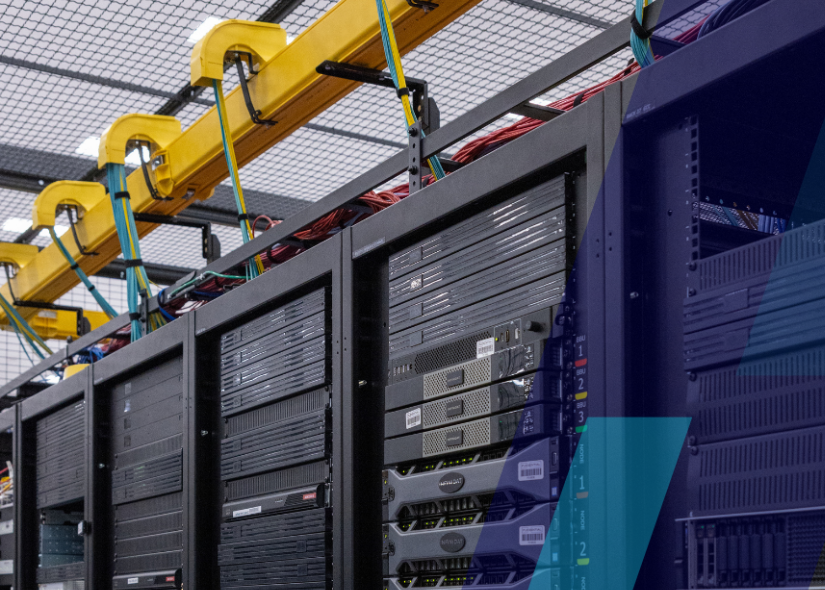
AI data centers are undergoing a density revolution. Where general-purpose cloud racks once ran at 3–15kW, today’s AI clusters routinely exceed 100kW per rack, with some designs approaching the megawatt scale. This leap is driven by three inescapable constraints:
- Performance – GPU-dense workloads require tight physical proximity for high-bandwidth, low-latency communication.
- Physics – Copper cabling limits transmission distances, forcing processors into close clusters.
- Efficiency – Higher density delivers better performance per watt, a key metric under ESG scrutiny.
But density comes at a cost. Structural loads—from both server weight and coolant fluids—often exceed the capacity of legacy raised floors, making retrofits prohibitively expensive. Liquid cooling is no longer optional; it adds thousands of connection points per rack, multiplying installation complexity. Electrical distribution, high-density cabling, and multi-level system testing now form a critical path where any single delay can push back the entire power-on date.
In the U.S. and Canada, where many existing data centers were built for sub-15kW densities, these engineering hurdles are particularly acute—and frequently derail accelerated deployment schedules.
3. The Labor Crunch: Why Traditional On-Site Construction Is Failing
Across North America, the construction industry faces a structural shortage of skilled labor—especially in HVAC, electrical, and mechanical trades. U.S. immigration policies have tightened the pipeline of foreign-born workers, even as domestic demand for data center and energy infrastructure surges. Canada faces similar pressures, with competing mega-projects stretching an already thin workforce.
Specialized trades require years of training; you cannot scale electricians or cooling technicians overnight. This supply-side bottleneck makes traditional on-site, stick-built construction increasingly untenable for AI projects that demand both speed and precision.
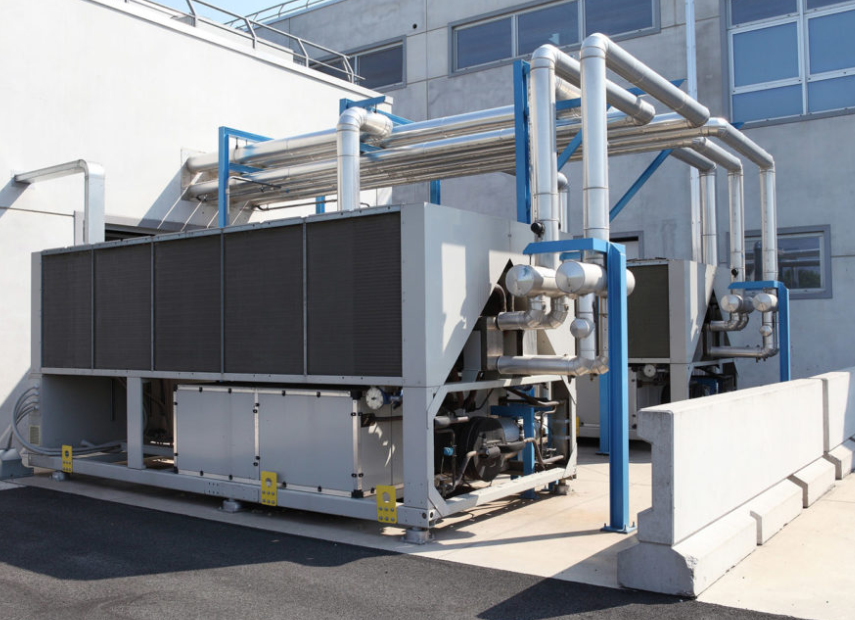
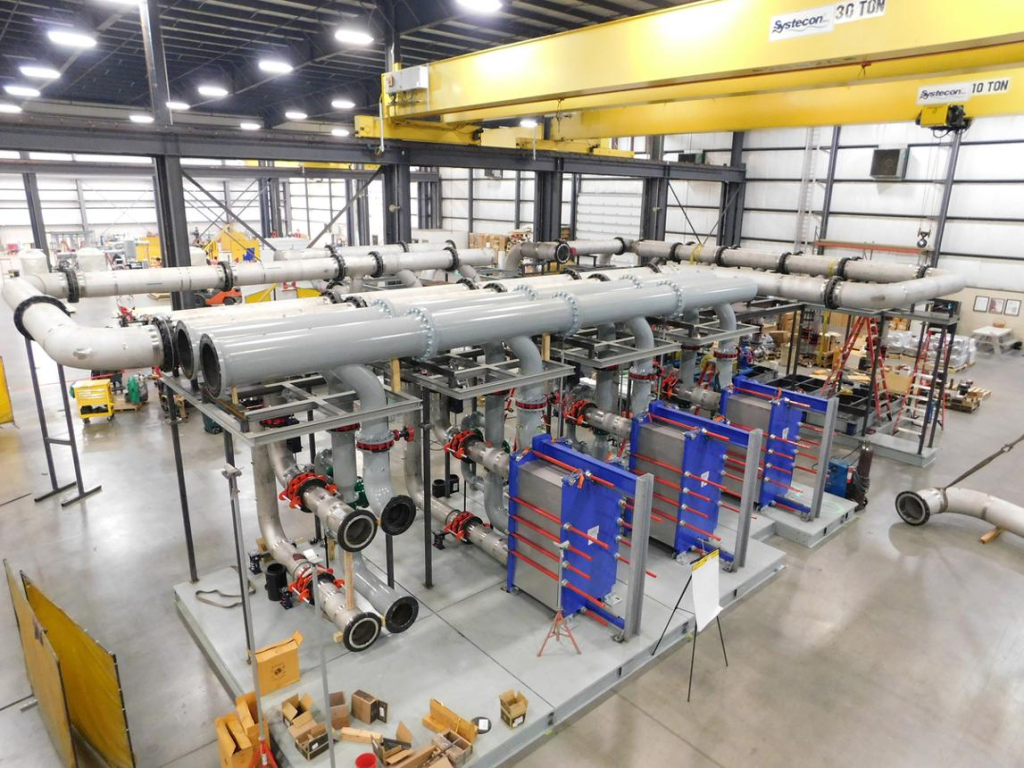
Modular construction offers a way out. By shifting complex subassemblies—such as power distribution, cooling manifolds, and IT racks—to controlled factory environments, modularization decouples the build from local labor availability. Factory production can run in parallel with site preparation, reducing on-site labor demand by up to 40% and compressing overall timelines dramatically.
Major U.S. hyperscalers have already adopted modular as their default delivery model for new AI zones, and Canadian operators are following suit, particularly in remote regions where local trades are scarce.
4. The Economic Core: It’s About Time, Not Just Cost
At first glance, modular construction does not always beat traditional methods on pure CapEx. Factory prefabrication, logistics, and the learning curve for new designs can push initial costs slightly higher. However, the real economic advantage lies in time compression—not material savings.
Industry experience shows that modular approaches can shorten project schedules by 30–50%, bringing a typical 24‑ to 36‑month build down to 12–16 months or less. For a 60MW AI data center, each month shaved off the construction timeline generates roughly $20 million USD in net benefit—a combination of earlier revenue recognition and reduced financing costs.
For cash-constrained hyperscalers or those relying on project finance, interest expenses alone can be cut by 15% or more over the build period. In today’s high-rate environment, that saving is substantial. Moreover, faster deployment allows operators to capture the peak pricing window discussed earlier, further amplifying the ROI case for modular.
5. Market Expansion and the Dominant Business Model
Global AIDC building and facility investment is approaching $200 billion USD annually. Yet fully modular penetration remains below 5% in the narrowest definition (integrated prefabricated modules). With tier‑1 hyperscalers now mandating full modularity for new AI-centric facilities, that penetration is set to multiply.
By 2030, we project fully modular adoption will reach 15%, creating a modular integration market worth ~$30 billion USD—a sixfold expansion from today’s base.
Business model dynamics:
- Hyperscalers (AWS, Azure, Google, and major Canadian cloud providers) continue to define their own specifications, procure core equipment directly, and engage integrators for final assembly. This model gives them control over supply chain and quality.
- Full-stack equipment vendors (with integrated power, cooling, and rack solutions) are well-positioned to capture edge and smaller enterprise deployments, where simplified procurement is prized.
- Module integrators—especially those with overseas manufacturing capacity and proven North American delivery track records—are emerging as the primary beneficiaries. Their order books are transitioning from pilot projects to recurring, multi-site programs.
The Strategic Takeaway for North American Decision-Makers
The AI data center build-out is no longer a straightforward real estate project. It is a race against time, constrained by physics, labor, and capital. Modular construction is not merely an alternative delivery method—it is the only scalable response to the compounding pressures of density, labor shortages, and time-to-market.
For U.S. and Canadian enterprises, the questions have shifted from “Should we modularize?” to:
- Which subsystems should we prefabricate, and to what level of integration?
- Which partners have the factory capacity and on-site integration expertise to meet our velocity?
- How do we align our financing and procurement models to fully capture the time-value benefit?
The next 24 months will separate leaders from laggards. Those who embrace modular as a strategic enabler—not just a construction tactic—will secure the capacity, margins, and sustainability performance needed to win in the AI era.
Ready to evaluate modular options for your next AI data center? Our team offers site-specific timeline modeling, supplier assessments, and total-cost-of-ownership comparisons tailored to U.S. and Canadian regulatory, labor, and grid conditions. Let’s accelerate your build.